
London Lorry Delivery Guide: Urban Restrictions, Parking, and Penalties
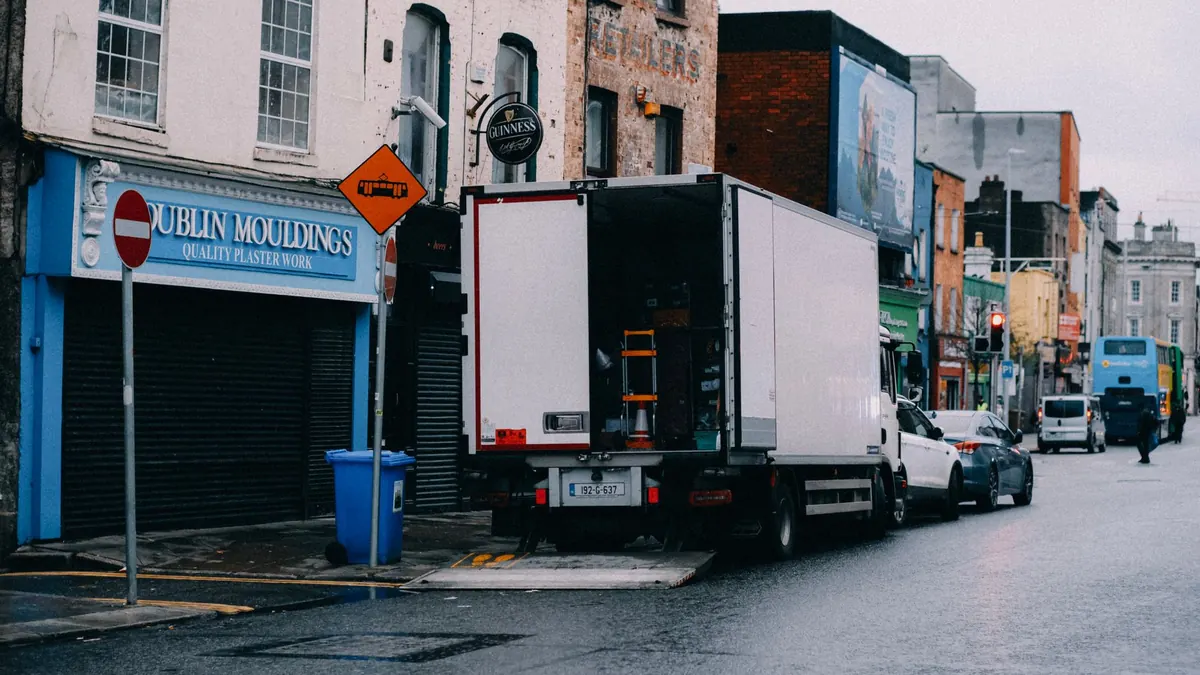
A 44-tonne artic bound for a building site off Oxford Street is a planning exercise long before it reaches the North Circular. Which charging zone does it enter, and at what time? Is the street behind the site a 7.5-tonne limit? Where does the driver stop if the bay is occupied? Get those questions wrong and the day is spent on the phone rather than on the road.
ULEZ, LEZ and the charges that stack up
Two separate schemes cover Greater London, and drivers regularly confuse them.
The Ultra Low Emission Zone (ULEZ) expanded to all London boroughs on 29 August 2023. It runs 24 hours a day, every day except Christmas Day. For diesel vehicles the standard is Euro 6; for petrol, Euro 4. A compliant lorry pays nothing. A non-compliant vehicle over 3.5 tonnes pays £100 for the day, while cars and vans up to 3.5 tonnes pay £12.50.
The Low Emission Zone (LEZ) is the older scheme, aimed at heavier vehicles and running around the clock, all year. The standard for diesel HGVs is Euro VI. Non-compliant vehicles pay a daily charge on top — because the schemes are separate, a Euro V truck working in London can pay both in the same day.
Three habits worth building: check every registration against TfL's compliance checker before it joins the fleet; set up Auto Pay or a fleet account so nobody is hunting for a card at 5am; and remember charges run until midnight, so a late load can mean a second day's liability.
Weight limits, night bans and the permits you need
The London Lorry Control Scheme
Often called the London lorry ban, this restricts vehicles over 18 tonnes on a wide network of roads at night and weekends — broadly 9pm to 7am Monday to Friday, and from 1pm Saturday through to 7am Monday. The strategic road network is exempt; ordinary streets are not. If your run involves a night trunk into an inner-city or residential address, you will usually need a permit or dispensation from London Councils. Operators get a limited number, so treat them as a resource and plan where they are spent.
Direct Vision Standard
Any HGV over 12 tonnes entering Greater London needs a valid DVS permit. Vehicles are rated from zero to five stars depending on how much the driver can see directly through the cab. Since 28 October 2024, three stars is the minimum; zero to two-star vehicles need a Progressive Safe System fitted to be allowed in. Enforcement is by ANPR, and the permit attaches to the vehicle, not the driver.
Safer Lorry Scheme and borough limits
Trucks over 3.5 tonnes must have sideguards and Class V and VI mirrors to operate in Greater London. Then there are the local bans. Plenty of residential streets carry a 7.5-tonne limit with a plate reading "except for access". Access means reaching a property on that road, not using it as a cut-through. "Except for loading" is narrower still. Get it wrong and you are explaining yourself to a borough enforcement officer rather than TfL.
Parking: the part nobody plans for
London has very little legal lorry parking, and most of it is taken by mid-morning. Red routes are managed by TfL: double red lines mean no stopping at any time, single red lines mean no stopping during the hours shown, and loading is only permitted where a box or bay is marked. Elsewhere, yellow lines and kerb blips tell you when loading is banned — one blip matches the times on the adjacent yellow line, two blips mean no loading at any time.
- Dedicated HGV spaces: M25 service areas, a small number of council lorry parks, and industrial estates in areas such as Park Royal, Barking and Dagenham. Check overnight rules first — several boroughs prohibit goods vehicles above a set weight from parking on residential streets.
- Loading bays: 20 minutes is a typical limit, and a bay shared with a bus stop is not a bay.
- Sites and yards: ask whether you can wait inside the gate. Ten minutes off the public highway saves arguments.
- Overnight security: fuel theft and curtain slashing are real risks. Park in lit areas alongside other trucks where possible, and avoid quiet laybys.
Planning the drop before you leave the yard
Confirm the booking slot by phone the day before, and ask the questions that catch people out: is there a height restriction at the gate, is the goods entrance on a different street to the postcode, is a banksman provided, and which side does the vehicle need to be on?
Timing matters more here than almost anywhere in the UK. Most sites take deliveries between roughly 7am and 4pm, and arriving in the 7am to 10am or 4pm to 7pm peaks costs fuel and patience. The school run, around 8:30am to 9:15am and 3pm to 3:45pm, blocks narrow streets in a way a satnav will never predict.
The Congestion Charge applies to lorries as well as cars, running 7am to 6pm on weekdays and noon to 6pm at weekends and on bank holidays. Thames crossings are tolled too, including Dartford and now the Blackwall and Silvertown tunnels, and rates vary by vehicle. Out-of-hours deliveries are worth exploring: quieter roads, easier parking, and often a faster turnaround, provided the site agrees and quiet equipment is used.
What the penalties actually look like
A bad London day rarely produces one penalty. A non-compliant truck can pick up ULEZ and LEZ charges on the same journey, a DVS penalty for entering without a permit, a parking ticket while waiting for a bay, and a separate notice for stopping on a red route. PCNs go to the registered keeper, which means leased and hired vehicles generate paperwork weeks later, long after the driver has moved on.
Early payment usually carries a discount, and there is a formal appeals route with a deadline that runs quickly. Keep delivery notes, timestamps and photographs. If you are running subcontracted or hired vehicles, check your contracts to see who absorbs a PCN — this is where disputes start. Rates, standards and schemes change, so verify current rules with TfL and London Councils before each run, and take proper advice on any penalty you intend to challenge rather than relying on what worked last year.
A working checklist for a London run
- Check every registration for ULEZ and LEZ compliance, and set up payment in advance.
- Confirm the DVS permit for anything over 12 tonnes, including hire vehicles.
- Read the route properly: low bridges, 7.5-tonne limits, night bans and any London Lorry Control permit needed.
- Confirm the slot, the access point and where you may legally wait if you arrive early.
- Plan parking and the driver's rest break before reaching the postcode, not after.
- Save the site contact and your transport office number somewhere you can reach without unlocking a phone cradle.
London is manageable when the paperwork is finished before the traffic starts. Draw the day up in advance, and it usually runs the way you planned it.
Photo: Mathias Reding / Pexels